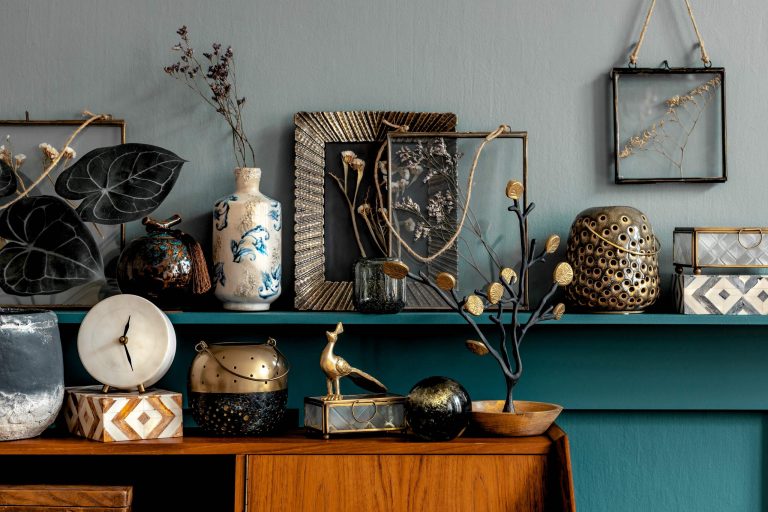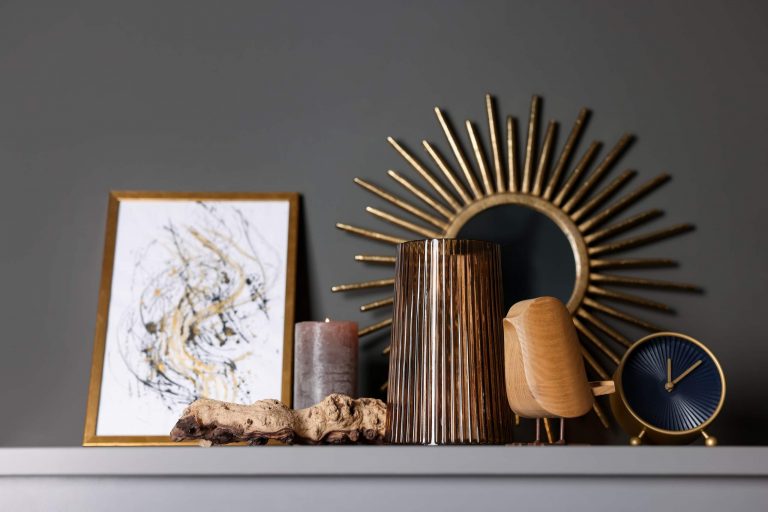
There’s no need to sacrifice your comfort just because your room is small. There are several ways to make a small room feel larger. In fact, using the right colour, furniture, lighting, and negative space can make all the difference in whether a small room feels cramped or comfortable.
You don’t need to strip your room bare, or even redecorate, to get these results. Often, a few simple changes can make a big difference.
1. Reduce Visual Clutter
The easiest way to make a small room feel bigger is to cut down on the amount of stuff in it.
When there are too many different objects vying for your attention, the room will seem much smaller than it is. Get rid of items you don’t use or like, and put the ones you do in their proper place.
Your room doesn’t need to be bare; it just needs to breathe.
2. Scale Your Furniture Correctly
Make sure your furniture is proportionate to the size of the room.
A huge couch or a bulky cabinet can overwhelm a small room. Opt for furniture that serves its purpose without visually cluttering the room.
Leggy furniture, such as chairs or tables with exposed legs, also help the room feel less cramped because it gives you more floor visibility.
Measure the room, and the furniture, before you buy. A few inches can go a long way in a small room.
3. Use Light Colours
Painting a room a light colour, such as white or soft pastel, can brighten up the space.
Light colours reflect light, which makes the room feel more open. Whites, warm grays, pale yellows, soft pinks, baby blues, mint greens, etc. are all good options.
That said, you can still use a dark colour if you want. A dark accent wall can give the room a nice contrast, as can a dark piece of furniture. Just don’t go all out.
4. Bring More Light Inside
Bright, sunny rooms are often seen as feeling larger.
Clear your windows of obstacles, like tall bookcases or blinds, and let the light pour in. If you need privacy, choose lightweight curtains or translucent blinds.
Another way to bring more light in is to use mirrors.
5. Use a Mirror
Mirrors help open up a room because they reflect light. A large mirror, hung in an appropriate spot, can help make the room seem more spacious.
One great place to hang a mirror is across from a window. You’ll get a reflection of the light coming in, as well as a glimpse of the outdoors.
It’s not necessary to hang a full-size mirror on the wall. One large mirror is all you need.
6. Show the Floor
The more floor you can see, the more spacious the room will appear.
Reduce the number of items on the floor, and use shelves on walls instead of free-standing storage units where possible. Even furniture with raised legs can make a space feel more open because you can look underneath it.
Use Vertical Space
If you live in a small room, you probably have unused wall space.
You can draw attention upward and make the room feel taller with tall shelving, vertical art, curtains hung higher up, and narrow storage cabinets.
Instead of laying things out horizontally, try using the height of the room to your advantage.
Use a Consistent Colour Scheme
Having too many unrelated colours can make a small room appear disjointed.
A limited colour palette gives the space continuity, helping separate zones in the room appear more integrated.
You can still add personality with art, cushions, plants, books and other accessories, but just try to repeat a few main colours so they don’t look random.
Leave Some Empty Spaces
When a room is small, it’s tempting to fill every nook and cranny.
But by leaving some spaces empty, you can actually make the room feel larger.
Leaving a corner, section of wall, or a patch of floor around a piece of furniture free gives the eye somewhere to rest.
Empty space is part of the design.
Make Each Element Work
When you’re working with a small room, every piece takes on a lot of visual weight.
So before adding anything new, consider if it serves a useful function, adds to the ambience, or does both.
A storage basket can serve a dual role. So can a stool, which can double as a side table. A mirror can be practical as well as making a small room feel brighter.
Choosing multi-functional items will help you maximise your limited square footage.
Consider Lighting in Layers
One single ceiling light often isn’t sufficient for a small room to feel cosy.
Where possible, aim to combine ambient, task and accent lighting. A floor lamp, table lamp or wall light can add warmth and different layers of illumination.
Using multiple lights will also keep the room from feeling flat, especially at night.
Keep It Minimal, Not Sterile
Just because you want your room to look spacious, it doesn’t mean you should strip out all its personality.
Opt for a few statement pieces rather than lots of small trinkets.
Large-scale art, a unique lamp, a textured rug, or a small collection of well-chosen objects can give the room character without adding clutter.
In Summary
A small room can feel comfortable, practical and chic when every design choice has a reason for being there.
Begin by clearing unnecessary clutter, then select appropriately scaled furniture, capitalise on natural light, and use mirrors, verticality and a unified colour scheme to create the illusion of more space.
You don’t need a bigger room; you just need to use the one you have better.